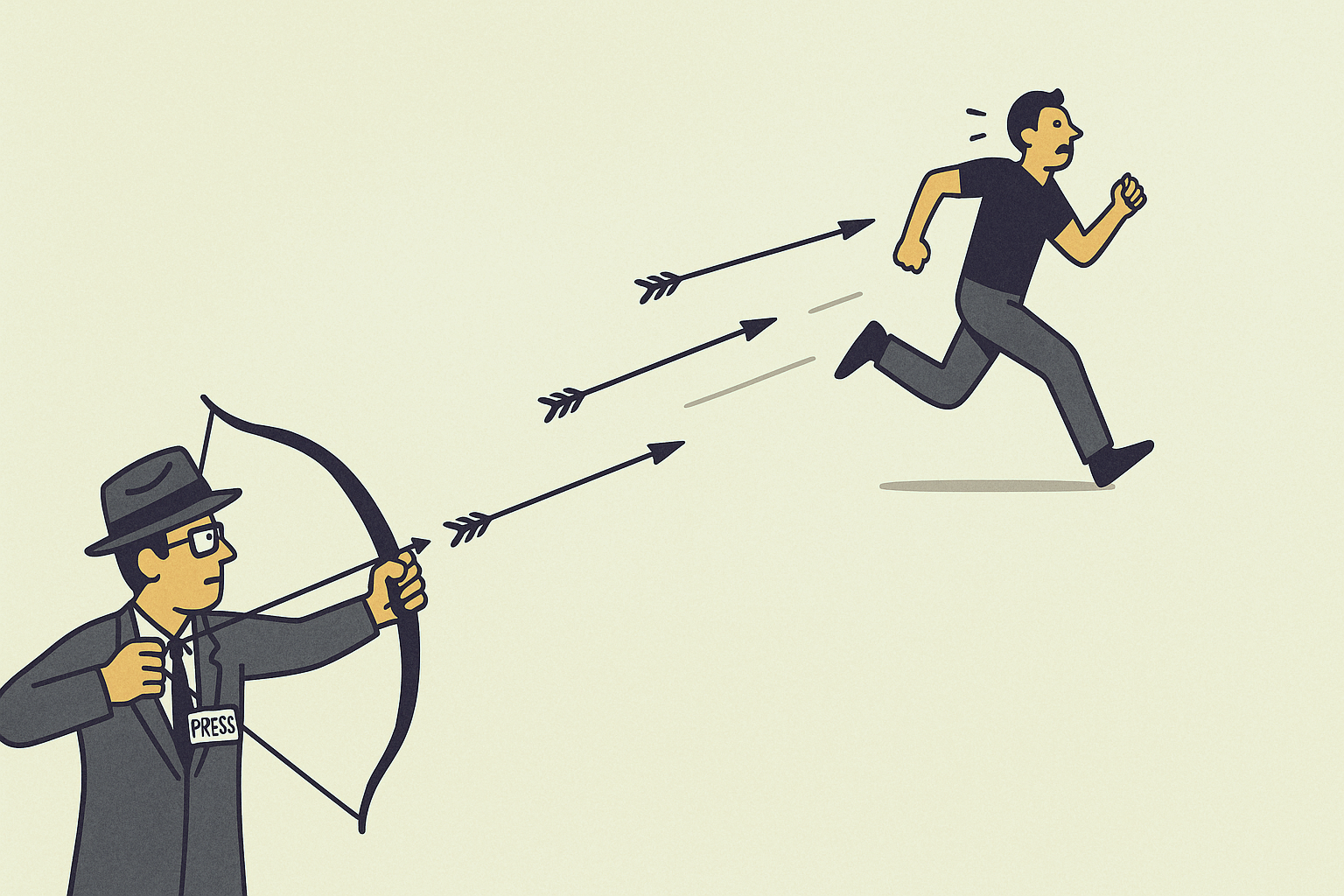
Last month, two founders approached me after being attacked by two different publications—both disgusting fabrications. Yes, hit pieces are real and they can happen to you. But you have a lot more control than you think.
First, bear in mind journalists aren’t out to get you. When I prep founders for interviews, I tell them not to worry about trick questions or being attacked. The wide-majority of journalists want to do good and are kind folks. Unless you’ve done something truly awful or are a major public figure, your’e generally not a target.
That being said, there are junk bottom-feeder publications that will attack people doing good, looking to make a name for themselves. These people suck And it should be said, reputable journalists hate them too.
What to do when media attacks me!
The purest of folks and philanthropists get attacked for no reason. If you’re reading this, there’s a good chance you feel like your neck is on the chopping block. The reality though, is that you have a far greater advantage than you realize.
Step 1. Remain calm
When you’re getting attacked unfairly, it sucks. Remaining calm probably isn’t your go-to reaction. I’ve been on the receiving end of death threats, I know how it feels. But keep in mind, your audience isn’t stupid. They fully understand trolls, tabloids, and reddit threads are fake. Those are the scum that write hit pieces.
When you’re the victim of a hit piece, you go into tunnel vision mode and think the whole word sees what you see. You think they’re all judging you. But they’re not. Almost all of them have no idea the piece exists and probably never will. Of those that do see it and know you, they won’t believe it.
The rest, an insanely small minority, likely won’t believe it either, and will forget within 24 hours. But that doesn’t mean you ignore it.
2. Don’t f***ing apologize. EVER
If you didn’t do something wrong, don’t apologize. Ever. When you apologize, it shows weakness. In your mind, you hope apologizing will make things go away but it won’t. Instead the opposite will happen—the attacker will double down.
Tabloid journalists operate in a predator mindset. They’re angry, bitter people, and enjoy taking others down—especially people trying to do good in this world. Apologies are like feigning injury. It can work amongst kind folks, but a predator will go in for the kill, seeing an easy victim.
The best tool is to stand up to them. Don’t apologize. Don’t sway. Don’t apologize.
3. Always give a comment
Tabloid scum will often ask for comment for the sole purpose of writing you declined to comment. It’s a fun game they play to look fair, while stabbing you in the back. But if you give them a comment on your terms you ruin their game.
If it looks like they have a negative angle, screen cap their email and reply publicly on a social media website (black out their email address, kill them with kindness.) Send them the link to your public comment explaining you want to give your comment and maintain full transparency. Keep your comment extremely short and to-the-point. The more you write, the more they can manipulate your words.
This allows YOU to control the narrative and takes the wind out of their sails. Never let trolls control the narrative.
4. Go public
Take the fight to their doorstep. Post what’s happening on social media. Go on the offense, but never personal. Always take the high road and remain kind. Be clear and extremely concise on the issues. Commit to transparency, then move forward and put them in your mirror.
When you’re attacked, the absolute worst thing you can do is say nothing. Lies fester in a truth vacuum. It’s best to post the truth and quickly pivot to a positive message. No need to get defensive or justify your actions. Only state the truth and be clear. Nothing more. Never link to the piece on any platform, it gives them more fuel.
(If it’s a tiny publication or individual with low-reach, might not be worth engaging.)
5. Request corrections.
If the publication is a legit business and they got something wrong. Tell them. Send an email to the editor and be clear on what’s wrong, adding no additional detail. Ask nicely for a correction, and use the word “defamatory” or “defamation” if they’ve posted false information.
Publications can be easily sued in civil court for publishing knowingly false information and defendants win these cases often. If they suddenly realize you’re not an easy target and are willing to put up a fight, they may back down quickly and correct the piece or delete it entirely.
6. SUE them!
It’s considered defamation if someone writes something untrue about you, and tries to damage your brand. You can sue them. Consult a defamation lawyer or a media law attorney. If you have a good case, the lawyer may work with you to get paid out of settlement winnings.
