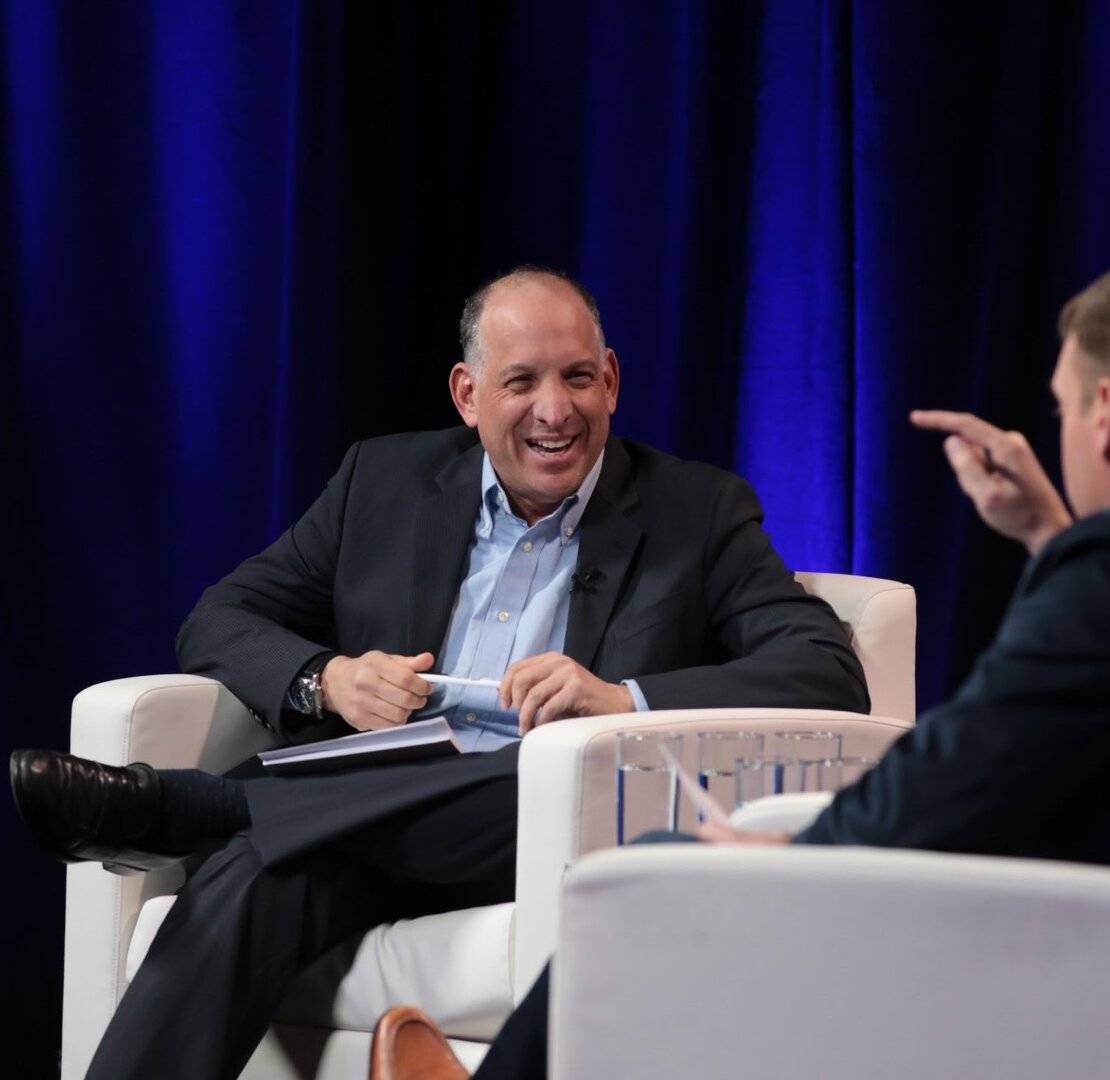
Mike Berland, Partner at Penta Group — When Mike Berland first came on the Justin Brady Show, he sounded a bit… well, nuts. Berland said he could measure cultural momentum, seeing cultural trends before they arrived. Then his predictions started to land, including a note about home-made bread that arrived before the pandemic emptied the flour aisle. On this third visit, now as a partner at Penta Group after it acquired his firm, Decode_M, he discusses which brands have momentum, and how people are changing the way they buy.
Momentum is mass X velocity: how big something is, and how fast it is moving. Decode_M built an algorithm that scores these within culture using digital media. They analyze the size of an idea, and the speed at which people engage with and share it. The resulting score is the idea’s “M-Factor.”
Social posts are only part of the feed. News stories, blogs, and anything else that can be pulled off the internet go into their magic machine. When he needs to know the “why,” he falls back on his political comms and polling experience, drawing from his work in President Clinton’s administration, Mayor Mike Bloomberg, Sen. Clinton and many others.
Under the M-Factor are five drivers. Disruption is whether a brand is breaking its market. Innovation is whether it creates a fear of missing out. Polarization, as he uses the word, is a clean split: this is for me, or it is not. Stickiness is whether anyone will remember it. Social impact is whether it helps in some larger way.
The brands that have momentum and therefore a high M-Factor have the right mix. When something stalls, one of the five (or more) is often missing. When something explodes, all drivers are often present. “When something isn’t working or losing momentum, I look to the drivers and I’m like, well, here’s the problem,” Berland said. “Or if someone’s like, my gosh, this really took off, we don’t understand why, I usually look at those five drivers. And I’m like, well, you’re hitting all five drivers. That’s probably why.”
2022 data on cultural momentum showed “fog,” for example. Inflation, a public argument over whether the country was in a recession, leftover pandemic political noise and a shifting world order factored in. Berland thought the transition would run through the political calendar into 2024. The idea underneath was bigger than a logo. People wanted things immediately, and they wanted to participate in brand experiences, not just hand over a credit card. Tight money, he said, makes buyers functional. “Before 2023, we were more whimsical. Now we’re a lot more functional,” Berland said. “When money gets tight, we become more functional.”
The years before 2023 were more whimsical and a bit easier from a brand-marketing standpoint, but today it’s tough. A celebrity holding face cream is not enough anymore. Closets are getting smaller and more honest: fewer curated looks, more pieces you actually wear. Utility matters and will matter more going forward.
The surprise on his board was 7-Eleven. No, not beer and cigarettes, but they ended up rolling out an app, delivery, and their shopper mix evolved from mostly male to about even across females as well, including a generation that doesn’t even remember the gas station days. Berland also elaborated on the bizarre Crocs–7-Eleven collab as well.
Crocs and 7-Eleven have almost nothing in common. Crocs had already been a pandemic winner, but together they made what Berland called functional collectability: a shoe people wear, tied to a convenience store that had become a statement. “I could wear a suit and wear my Crocs and nobody would give me a second take,” he said. “If I put my Lucky Charms Crocs on, everybody would admire the statement I’m making with my Crocs and my individuality rather than judge me for not having my fancy leather loafers.”
The same pressure is changing how people pay. Buy now, pay later, the Klarna-style four payments, was fading. Older customers recognized it as credit. Miss a payment and the interest shows up. In its place Berland pointed to Accrue, where you save toward a trip or a refrigerator with the brand, the company can match you, and friends chip in instead of giving another birthday gift. Saving used to mean a slice of the paycheck in a bank. Now it can mean working with the company you plan to buy from so you do not stretch yourself on credit. Berland says this will heat up.
Berland also predicted we’re entering the stakeholder economy.
Leaders need to embrace change that the customer is not the only audience. Employees, investors, suppliers, the stores that sell the thing, and the towns around it all matter. Chief executives who used to talk only about shareholder value now have to say how they make the world better, and they get held to it. Some of those groups watch every day.
Penta is what widened the lens. Decode_M had spent five years on the consumer. The combined firm brought public affairs, London and Brussels, and a clearer view of NGOs, investors, and employees. The work is at pentagroup.co. He posts the rest on LinkedIn.
Learn more about Mike Berland and Penta Group at pentagroup.co.
The original show notes were lost. This summary was written by Ai and edited by a human.
