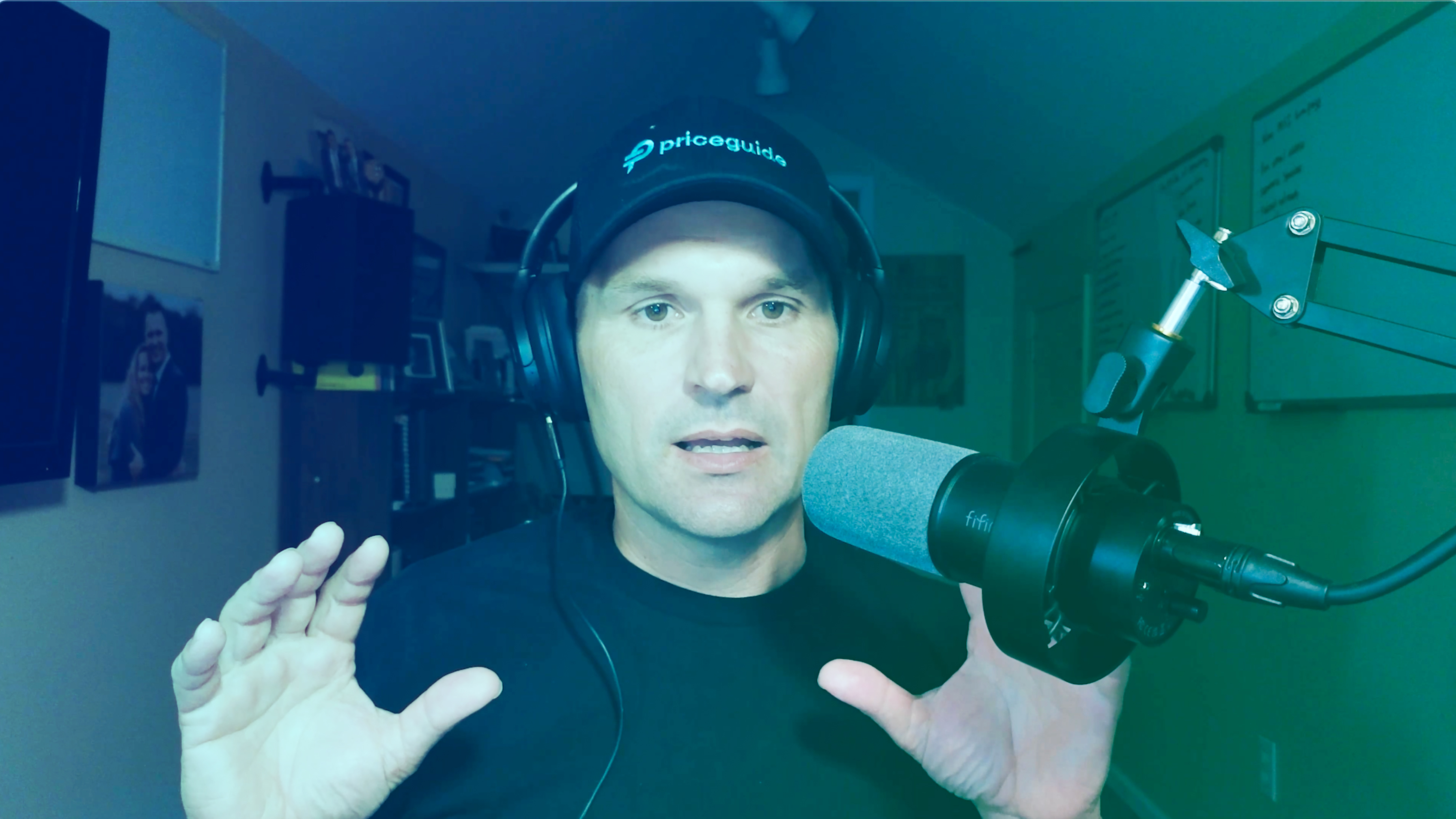



Marcus Sheridan, Author of They Ask, You Answer — A discussion on how to create show content listeners are primed to listen to, the true impact of AI on SEO and trust signals.
Founders, you kinda suck at SEO, content, and communications. That’s tragic because many of you have incredible brain-frying technology and ideas the world wants to hear about. Marcus Sheridan, author Endless Customers describes why AI has made web content more important than ever, and explains why YouTube is just as important as your own site.
Sheridan’s first book They Ask, You Answer detailed the process he followed to become the #1 website in the world… for pools. You read that right. He ended up ruling the internet for a heavily commoditized business. He explains how to increase “signals” increasing AI’s likelihood of recommending you, and warns founders and CEOs on getting in their own way, killing inbound content marketing strategies that could bring them… ahem… endless customers.
From Pools to Prolific Content
Marcus Sheridan’s journey into marketing authority began not in a boardroom but in backyards across Virginia, where his swimming pool business teetered on collapse during the 2008 financial crisis. “That was one of the last big crashes that we had, and it was during this time that I thought we were gonna lose the business,” he recalled. He turned to an insight that reshaped his trajectory: the modern buyer’s hunger for transparency and self-education.
Obsessed with how buyers’ behavior was evolving, he created a simple approach most would probably ignore: answer every customer question openly online. “We became essentially the Wikipedia of pools,” Sheridan said, recounting how River Pools ascended to become the most trafficked swimming pool website globally. Because his strategy worked in a heavily competitive industry, he proved few want to be transparent and answer customer questions.
His philosophy became a best-selling book, They Ask, You Answer, making him a go-to voice on trust-building content. As Sheridan put it, “There is trust to be found within transparency, and there’s a major trust deficit in the world today.”
AI, SEO, and the New Battleground for Attention
In the age of artificial intelligence, Sheridan acknowledges the rules of customer attention and digital are changing. AI’s growing role in search is altering how buyers find information and how businesses must respond. “There’s a massive disruption that’s happening,” he noted, “we’re seeing a huge shift of people move from Google to places like ChatGPT to get their answers.”
Sheridan stressed that while traditional SEO tactics still matter, companies must now appeal not just to customers and Google, but to AI platforms that act as information gatekeepers. “In many ways, as a business, you in the future will live and die by how much AI recommends you,” he warned. This requires businesses to cultivate widespread trust signals—everything from high-quality content and robust social media presence to third-party reviews and earned media. “If you’re not recommended by AI, you could be in big trouble,” Sheridan said.
What the heck does that mean? It means single-channel strategies like on-page SEO won’t cut it. “We can’t just ride a single horse to the promised land like I did in 2009 and expect to have glorious results,” Sheridan emphasized. Instead, companies must think and act like media organizations, producing diverse content across formats and platforms.
Imperfection and Authenticity
Sheridan’s prescription for success with AI-junk lurking around every corner hinges on meeting customers where they are—and increasingly, that means on video platforms. “Within five years, there’s a strong argument that your YouTube page will be more important to your brand than your website,” he declared, a statement that may jar traditional marketers but reflects shifting consumer habits.
Importantly, Sheridan warned against over-engineering content. The AI age, paradoxically, makes imperfection a marker of authenticity. “We’re entering this period where imperfection will actually be rewarded,” he said, cautioning that overly polished content may come across as manufactured by AI. His advice? Use AI as a creative collaborator, but let human nuance and voice shine through: “If you wouldn’t use that word or phrase as you were chatting with a friend in a coffee shop, then you shouldn’t be using it in your content.”
Sheridan practices what he preaches, sharing how he leverages AI tools like Claude and ChatGPT not to replace human effort but to amplify creativity. “I couldn’t code a McDonald’s Happy Meal,” he quipped, “yet I’m sitting there building apps because I’ve got this incredible thing called artificial intelligence.”
Leaders need to suck it up
If content marketing is a long game, Sheridan argues, it requires not only consistent effort but also leadership buy-in. Too often, he sees CEOs stifling innovation. “The number one email I’ve gotten over the years is from marketers saying, ‘Marcus, I know we could do so much more, but my CEO won’t let me,’” he shared. For content strategies to thrive, leaders must embrace disruption rather than demand proof of concept from competitors. “Anytime someone said to me, ‘Can you show me other companies in our industry that have had success using They Ask, You Answer?’—if they asked that question, they weren’t gonna be successful.”
Sheridan urged leaders to shed the safety of conformity and foster a culture willing to experiment and sometimes fail forward. As he framed it, “Your success as a marketer rises and falls on your ability to get for big ideas.”
Self-Service Tools
Sheridan also highlighted the growing importance of interactive, self-service tools in winning customer trust and capturing valuable data. “If you have the type of…thing that people are like, ‘roughly what’s this gonna cost?’—you should have an estimator,” he said. His new startup, Price Guide, helps businesses implement such tools, and he claims the results speak for themselves: “Generally, we see an increase in leads by three to five hundred percent.”
Looking ahead, Sheridan sees abundant opportunity for businesses willing to adapt. Despite the complexity of the digital age, his core message remains elegantly simple: “You have to create enough trust signals in the marketplace so that AI says, ‘There’s something about this company that I’m seeing across the board.’”
