
Pre-internet, reaching new audiences for your idea meant “renting” space on platforms that held the keys of distribution. TV and radio held FCC licenses. Newspapers and magazines had massive print circulation. They were the gatekeepers, but when the internet ripped away the keys, brands maintained their old “rental” thinking.
With unprecedented access to audience, brands still talk about themselves and push ads even on their own platforms. They post about new products, trade show appearances, and highlight product features over and over again. “Rental” thinking doesn’t work on owned channels, but they keep doing it. This is tragic because they now have the keys to attract highly targeted audiences on media channels they fully control. But they have zero patience.
Advertiser VS Publisher thinking
Most brands still maintain old guard-marcom and Madmen style approach. The old idea was this: you had one shot and a limited budget therefore you develop big campaigns, shove it down people’s throats, and hope for conversion via brute force.
With little competition and high prices, big guys consumed all the mindshare and won. But that ship has sailed. DTC brands are eating the big boys lunch and small creators out maneuver big brands often—heck, a bunch of social media users on X took down the Cracker Barrel rebrand with little-to-no-effort.
Marketers, comms folks, and Madmen sycophants who successfully jumped to own their media channels, newsletters, video, etc. never switched mindset from advertiser to publisher. Their web articles, podcasts, YouTube channels, social accounts, and newsletters push out self-focused content. They see no problem with this as they ignore similar messaging from other brands online.
Advertiser thinking doesn’t work and some brands are starting to get the clue they should think more like publishers, but they have no patience for it.
Building your own media channels
You may have heard your CMO should think like a magazine editor or a news producer. But practically what does that mean? It means building a media asset 100% focused on your customer identify, archetype or persona within your credentials or capacity.
It means REI should build a podcast or YouTube channel for outdoor enthusiasts. Not a channel devoted to gear.
It means King Arthur Flour should create a podcast or YouTube channel for bakers, not a show on the science of flour. (They have a great channel BTW)
But it goes further than that. Consider RedBull’s savant-level publishing. They create feature films, the air race, and extreme sport competitions. What does that have to do an energy drink? Nothing. But what does it have to do with their target customer?
EVERYTHING.
RedBull has created a digital media company focused on drawing out and creating relationships with the target customer they’ve identified will buy Red Bull. They’ve created raging fans because they’ve made events and media their ideal customer loves, and here’s the kicker:
None of their competitors can access this tribe.
Do you get it yet?
The magic of publishing your own sh*t
When you become a publisher you can highly tailor the audience based on what content you create. You can lock out all competition. That’s powerful.
Consider when you advertise with another publisher, you’d do great if 10% of their subscribers are your ideal customer. That would be fantastic, actually. But if you create your own channel you can push that number to near 100%.
Consider this visual. The two bubbles represent the potential audiences on a “rented” platform like radio, TV or social media. If you become a publisher and effectively your own media channels your overall reach will be small, but overall concentration is higher.
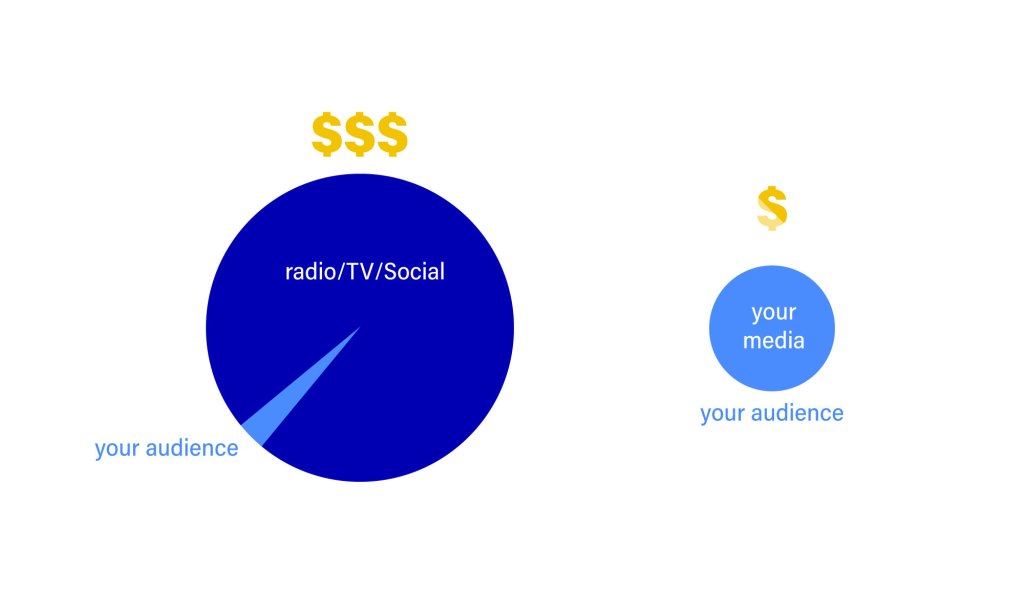
In the left bubble you may a lot more to reach audiences that aren’t a good fit. In the right bubble, you only pay for audiences you want to reach. But the cost savings continues when you realize you’re not financially dependent on advertisers.
The other factor to consider is that on the left bubble, when you stop paying your already meager stream of customers is immediately cut off. On the right, the customer relationships you build are owned by you. Your subscribers and followers stay yours forever.
And this entire conversation hasn’t even gone into detail about how becoming your own media channel and publishing your own sh*t impacts your search engine ranking and find-ability in ChatGPT, Grok, and Gemini.
Creating unique, high-value content is key in LLM and search engine rankings today. As people use AI to repurpose and write for junk articles, search engines and LLMs will continue to deprioritize re-purposed junk, amplifying unique contributors.
